cecil street interview
__________
Archive Article, Volume 10, Edition 3
Interviewer: Josef Lehrer
___________
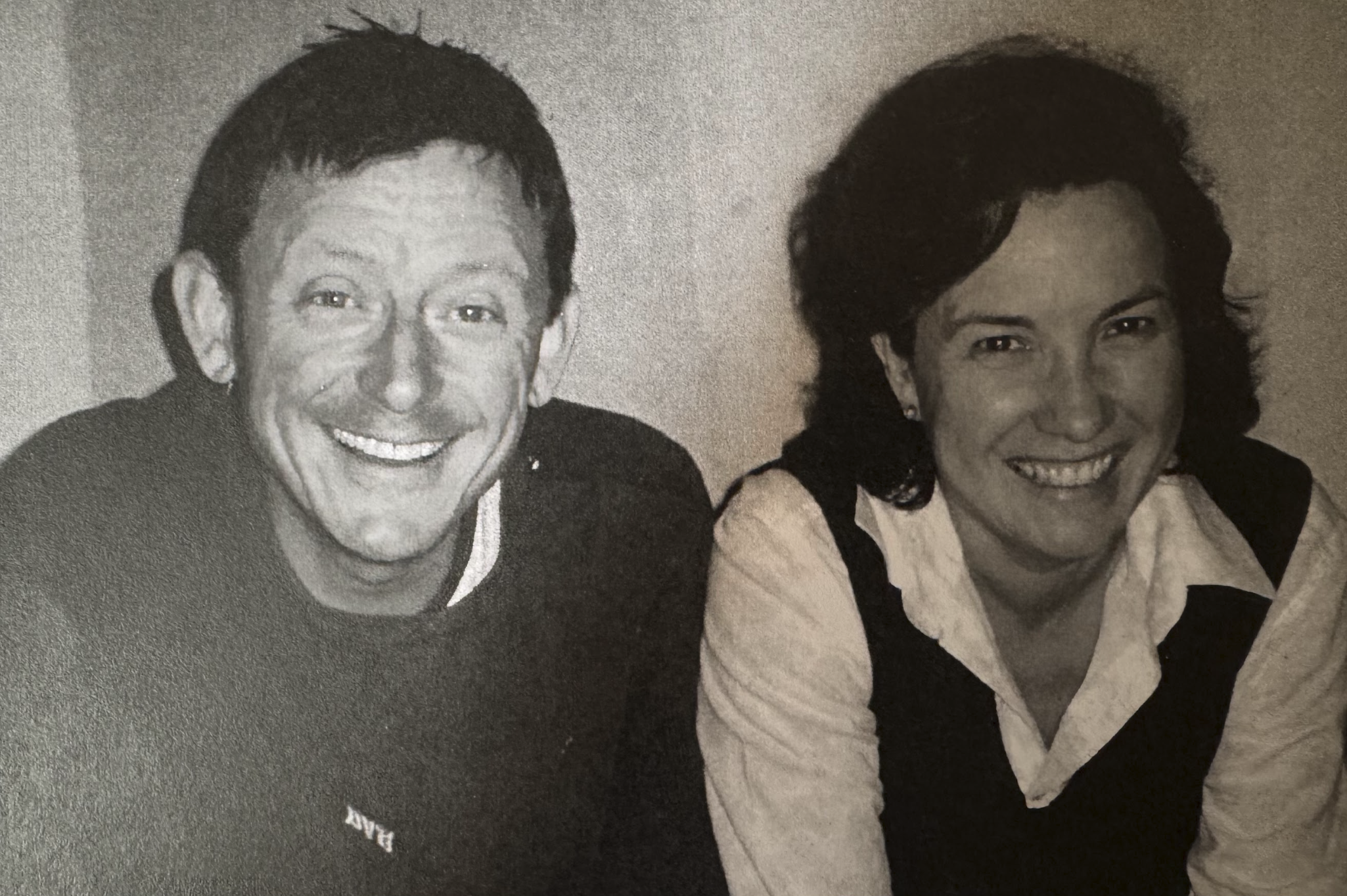
Martin Hughes and Fiona Cook, founders of Cecil Street Studio in Melbourne.
Martin Hughes & Fiona Cook founded and established Cecil Street Studio in 1997. Since that time they have supported its development into the current hub of Melbourne's improvisational community. In early June, as they prepared to handover the studio's operations to the newly formed committee Cecil's Moving Body, I caught up with them to hear some stories from their past decade. This article is an excerpt from the interview that took place shortly after The Jolly Good Show - a special benefit concert put on for Cecil Street Studio by Cecil's Moving Body.
Josef Lehrer: Hello
Fiona Cook: Hello
Martin Hughes: Good Evening and welcome to our kitchen. (laughter)
F: The kids are in beds; reading. (laughter)
J: So last week, you guys were at The Jolly Good Show. How did you enjoy it?
M: It was a beautiful show.
F: Yeah, it was a great night, a really great night. I thought they did a fantastic job of bringing people together, and great performances. It was a really great feel-good night and a really great credit to the new group.
M: Yeah, it was really good. A great testament of how well they're hanging together and doing what they need to do. But also, Dancehouse, how good were they? You know, squeezing everybody in.
F: Yeah, great support from everyone there, I thought.
M: That was really good actually, cos that's the kind of thing I experienced overseas a couple of times, you know, where different venues would actually do stuff like that to support other venues, it felt really good. It's so what we need to do.
J: And so with such an audience turnout, and with such a wealth of talent performing, how does it make you feel about Cecil Street's place in the improvisation / dance / arts community?
F: Well it's held together, and the community has sort of grown itself, really. And it must be quite an established place! It'd sort of funny looking at it from [that angle]...but yeah, it's held together and is really growing, and great [to see] all these people who I've no idea who they are. That's fantastic too, to see unknowns.
M: I think Michael Shaw put it really beautifully. Wasn't he the one who said something like we're the grandparents now, like our kid are growing up and it's mature enough to go on it's own and we can just have the no care, no responsibility, just the experience of being grandparents and just watching it go on now. So that's a good feeling, that's a very nice feeling.
J: Yep. So, from this point now I'd like to return to the beginning, the very beginning, and since Cecil Street is as much a story about the two of you as about a space, where and when did you meet? (A very long pause, then laughter)
F: Well, Cecil Street started as a conversation in the pub.
M: Oh, really?
F: Yep. We'd met before that. And we'd known each other for, I don't know...
M: ...oh, her memory's good. Go on..
F: ... a bit of time. It was a conversation around there not being enough accessible dance venues, and Flux were rehearsing and finding it really difficult to find regular accessible spaces, that weren't turned into performance spaces. And, you know, we had a few dreams and ideas, and just decided that we would start to look for a space that we would live in and start running ourselves.
M: That's good, I forgot all about that. That's really good, but it's quite true accessible was something we always wanted. We didn't push very hard for it cos, really, accessible meant just available, in many ways. Well, it meant it was for Janice [Florence] - wheel-chair accessible - that was part of it and cos we knew we didn't want lots of stairs, but we could handle a couple. But dealing with all the other venues that we were sometimes using and were often co-opted for performances, or compromised by performances.
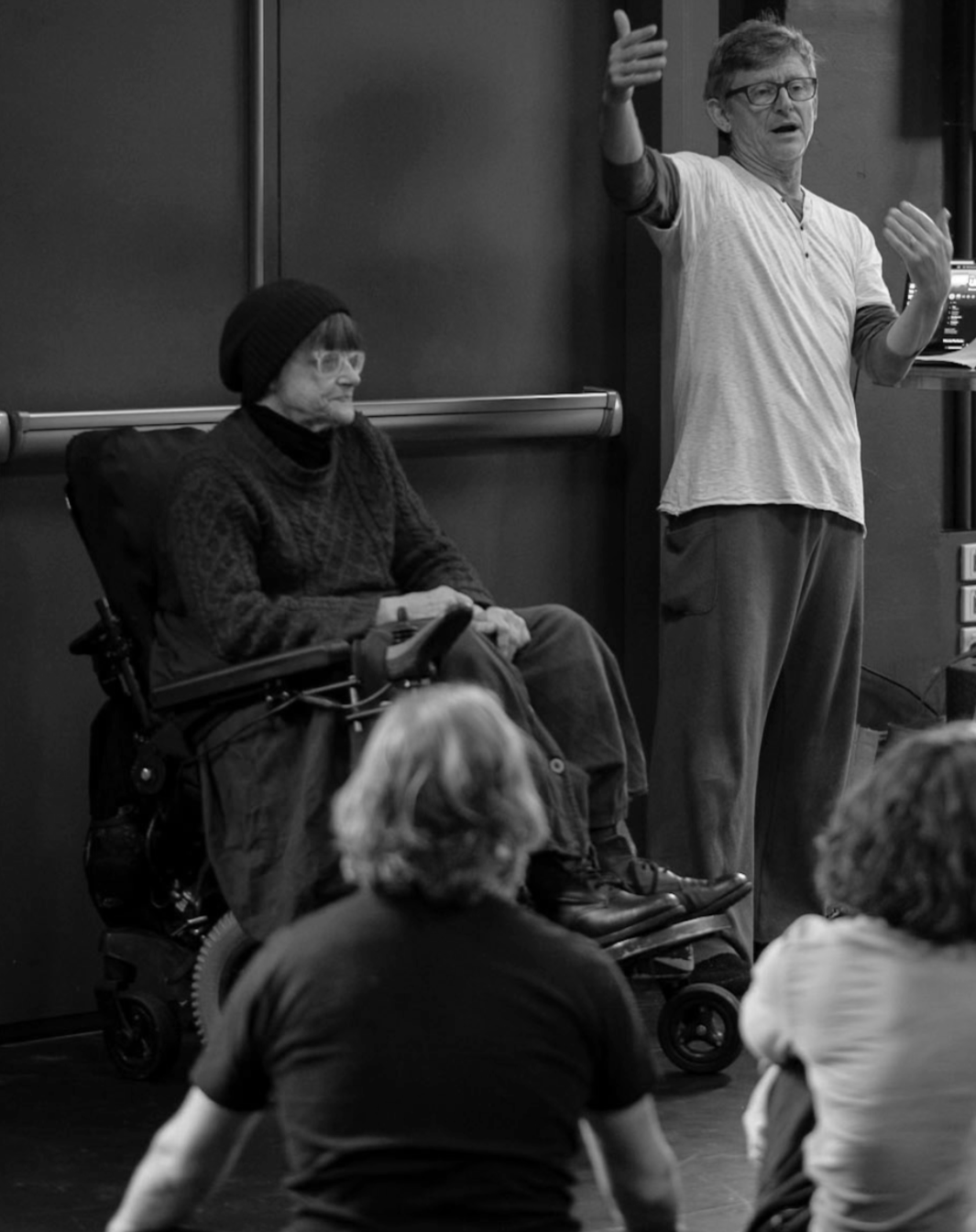
Martin Hughes with Janice Florence during the State of Flux History, Melbourne 30 Year Celebration Event, 2026.
M: So, the best one we ever did was we turned up to a space and there was a great big pile of dirt, not just sand or something, but garden soil in the middle of the space. We were supposed to teach a class there. So the idea was to make a space that never did that. You know, you booked it, it was yours, it was for the making of work, for the rehearsing of work, for the teaching of... for the time you had it.
F: And we were going to live there forever. (giggles into full laughter)
J: And so you actively went on the hunt for a space? Or...
F: So, yeah, we just kept looking around and then we saw Cecil Street and we really, really liked it, straight away. But it had, you know... it was really grotty, it was really grunge and...
M: The floor was extraordinary. Remember the dirt on the floor?
F: Mmmm, and the walls and everything. And we had the idea of making it liveable, so we knew we were going to have to put a lot of elbow-grease in. Which we just did. Which was great, that was one of the best parts about the whole project.
M: Yeah, and all those lovely people who came and helped.
F: Yeah, it was fantastic.
J: How long did it take you to fix up?
F: ... we opened it as a studio in July.
M: the first of July was the first month we opened.
F: We had the floor sanded originally, which is what we were really excited about that venue cos it had a springy floor and a wooden floor. And everything else we'd seen was concrete, and we were really excited.
J: So, it was just a matter of cleaning up the floor?
F: We had it sanded and polished. We spent a bomb on the floor.
M: We spent a bomb on the floor... (chuckles)
F: And then it broke up.
J: Was it daunting taking on the studio? I mean, from deciding to want a space and then finding it and then... was there any...
M: No, it was fantastic. It was so exciting, to find it. And then to go 'yeah, we can do it!' And we did all the maths and worked it all out and, you know, that's all nonsense (laughter). And we thought we could...you know, it made sense to us.
F: It was great, just great. It was a really exciting adventure.
M: Yeah, really exciting. And so many people helped. Hence it was never something we were doing on our own, rarely.
J: And so, some of your regular tenants, had they come and joined you at that stage?
F: Peter Trotman, pretty much as soon as we opened, took Monday nights and he has had every single Monday night without a break for ten years.
M: Christmas and New Year's.
F: Monday nights has been Peter, for ten years; Tuesday nights has been the Jam, for ten years...
M: But that's was the thing... We were trying to remember that, when did Cubitt Street fold? When did Al start? Not until Christmas.
F: Well he phoned us and said 'Look, Cubitt Street is being redeveloped.' The timing of it was -
M: ...extraordinary.
F: We have it back...
F: ...bizarre. Because we had no idea at that [stage] and neither did he. And he said, 'Would you have space? Do you think we would be able to talk' And we went 'that happened faster than we had time to plan other things too. But it was such a godsend.
M: But, was that by Christmas that he was in there?
M: Yeah, we have the diaries. Oh wow, that’s right. We could go back...
F: We've got all the original diaries and message books and all that stuff.
M: Yeah, we have the diaries. Oh wow, that's right. We could go back...
F: We've got all the original diaries and message books and all that stuff.
J: So, in those first couple of years, what were some of the challenges that you faced?
M: Living there was a pretty big challenge. It was a beautiful place to live, actually. That room upstairs is a beautiful place to be. It's got fantastic light and is very warm. Fi did beautiful things in setting it up. But sharing your space - it wasn't really your lounge room - but the space between your bedroom and the toilet, bedroom and the kitchen, with whoever comes and goes was tough. But the challenges of running the space...
F: You know, it did put financial challenges in front of us, but for some naive reason we weren't daunted by that. (chuckles) And it's not like we were overflowing with money, I mean I think people had ideas that we had all this money. I mean, we really didn't. We weren't on huge salaries, you know, we were just naive and willing, just really determined and willing to know that we could make this work.
J: And what was your vision for that time? Did you have an [idea of] where you wanted the studio to be in two or three years time? Or were you simply about getting it up, getting it running?
F: Well, I mean, right from the beginning it was about a place for workshops and classes; right from when we opened up, we were really clear that it was for workshops and classes and research, and for explorations. That was... performance wasn't...this beautiful thing, another great event would be happening and these wonderful people would come and learn and teach and be a part of the event.
M: "..for the making of.."
F: Yeah, we talked a lot about 'the making of.' And exploring our own practices and finding a home for the Contact (Improvisation) community, and that was exciting.