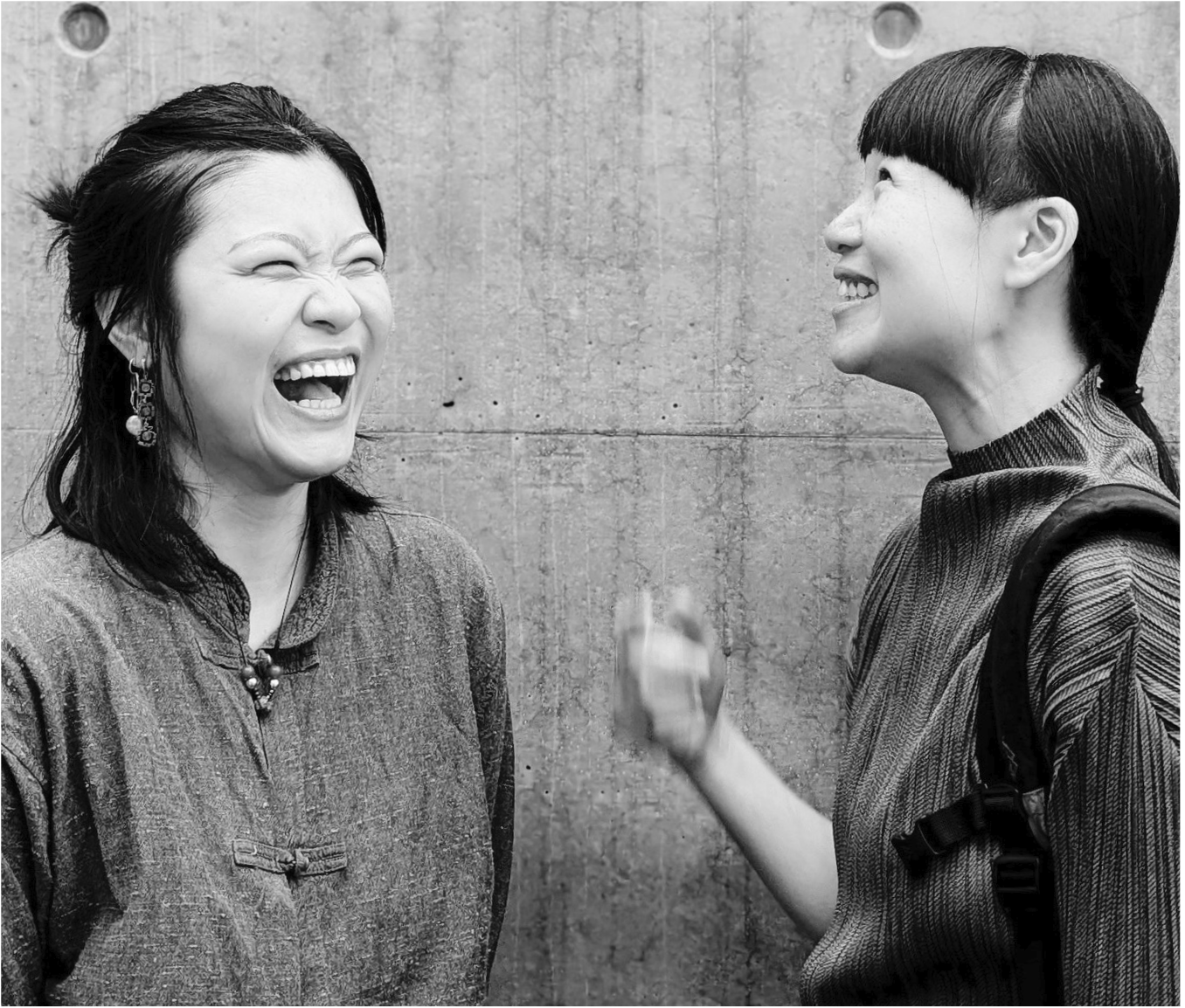
øsmøsis: a dialogue
__________
Article, Volume 16, Edition 1
Authors: Doreen Ooi & Ren Jin
___________
Ren: We're doing an interview.
Doreen: For each other.
Ren: For each other. Okay, so, I prepared four questions….let's do it.
Doreen: Okay.
Ren: Okay, well, my first question for you is, how do you feel today?
Doreen: Oh, my God, that's so funny. How do I feel today? I feel um... I feel really happy. Like, I feel like every time I come here, it's like going into a different universe, and it's just great to be here on the land with like my favourite people as well. And I always feel like when I'm here, I'm also a little bit in like project mode as well. I'm here to prepare the next ØSMØSIS, but also help you with the burn off…
Ren: Since we are on the topic about land, the retreats are closely intertwined with the land and the wider natural environment. How does working in improvising outdoor shape the CI practice for you, and what kind of transformation or challenges do you see arising specifically from this nature-based container?
Doreen: Oh, that's a nice question. It's interesting because I think nature listens, and nature responds, but the way humans interact in the way we engage for CI and dance - in a way, we need to accommodate a lot more for nature than nature accommodates for us (in a dance). For example, as humans, we can make a negotiation because we can, verbally communicate our needs and stuff when we are dancing CI. But a tree that is rooted to the ground, for example, or a really wet piece of grass. We are the ones who have to negotiate with the earth and with nature. I think that opens up a lot of really cool possibilities, and it's also very humbling. So, through those, negotiations, I think we listen better.
Ren: Next question. You and I intentionally blur the line between teacher, organiser, and participant. Inviting experienced practitioners to come as a community of learners rather than, you know, teachers and stars, gurus. What have you discovered about hierarchy leadership and neutral support through this way of hosting?
Doreen: I think personally for me, with the relationship with the teachers - I usually talk to them about the plan before they come. Because of this, I feel like I almost take on a teacher role as well, because I know what they're going to present, and I have a responsibility to set up a space for them to enable their teaching and their offerings to be as fruitful as possible.
And then you were saying, so there's, teacher, and then there's spaceholder, right? And leader. I think there is also a caretaking responsibility as well, because not only are people there to research, but we want people to flourish in their research as much as possible. I think that's the role of a host, is to make people feel so comfortable and at ease that they can really focus on what's most important for them being here. which is connecting to the land and connecting to the practice of CI…And then there's also, like, huge respect to land, right? Like, we've had to clear land and change, change things to accommodate, as well. But how do we respect your property at the same time, make it usable and make it a place of, like, practice and study for the people who are coming to ØSMØSIS.
Ren: Great. Yeah. ØSMØSIS gone into a long form, slowly, hopefully. Residential CI container rooted in nature and community. From your perspective, what is the core question or underscore that sits at the heart of this project right now?
Doreen: Hmm. ‘How does the environment impact my practice? And how does my practice impact the environment?’
Ren: Hmm, that's great.
Doreen: Yep. Very simple.
We swap roles between interviewer and interviewee..
Doreen: how would you describe ØSMØSIS to someone who has never been to ØSMØSIS before?
Ren: Oh, yeah! It's nature based inquiry. It's a two to three day contact improvisation retreat, and we invite different teachers with different somatic backgrounds, to blend in, to lean into the CI practice. We dance, we eat, we sleep, together.
Doreen: And for you, how has ØSMØSIS changed your relationship to contact improvisation? Because we've been doing it for nearly 2 years now.
Ren: It feels so much at home for me, since it's my home…. The first thought I had was, how much it changed me in my relationship with the land…I feel like, you can't take that separately, my relationship with land influences my relationship with CI, influences my relationship with land, sort of thing. And ØSMØSIS really helps me to have this regular kind of reset connection with the land with others, because once one person is in a space long enough, they tend to, I mean, I tend to get used to my relationship with it, or, you know, my perception of it. And when there are other people interacting with the land and I perceive them, how they interact with the land, it changes my relationship with it again.
Doreen: Nice. Or the space.
Ren: And same as CI, I guess, when we dance on our own, it's different. Like, I can dance in my dance studio. But that's different when there are other people dancing with me and the CI, as a practice, is sort of relational. And so, then my relationship with myself changed, or the space change, because of my relationship with people.
Doreen: Yeah, it's interesting, now I feel like I’m answering my own question. I'm thinking when we hosted, it changed my CI practice, not because not only nature, but it's because also domestic. It's also kind of like our living room, right?
Ren: Right.
Doreen: It's also our kitchen as well. So, it's has this kind of social angle, but then there is a social angle and also nature angle, because we're literally outside as well.
Ren: Yeah. The sun, the sound of birds, everything is underscored, you know? I think that also, when we started our project ØSMØSIS with the idea of Underscore, a long form Underscore, and I always had this, you know, feeling, and we had this conversation about how that is what we love about CI is that kind of underscore, and how nature or our living, how they container extends beyond this 4 hours of 3 hours of underscore practice it goes through in our lives. So by hosting and participating in ØSMØSIS retreat in... in our own home space, or, like, you know, with people, we kind of know to a degree. It’s really is the extension of CI blurring into life.
Doreen: Definitely. What are your biggest learnings from this project?
Ren: I think the first thing that popped up for me is relationship, you know, like us working together.
Doreen: I agree.
Ren: Hosting. Yeah. So, like you said, we have different styles, and we also complement each other.
Doreen: Definitely.
Ren: And through the kind of bumps and different things, we experience the growth, our friendship, and it also grows ourselves. Yeah. And kind of cultivates what my intention is over time, because obviously, this is a community project we do, and what we give and what we receive and sort of... feeling that it's like “okay, what is our intention?” every time when this gets really hard. I think that was a good North star for us.